
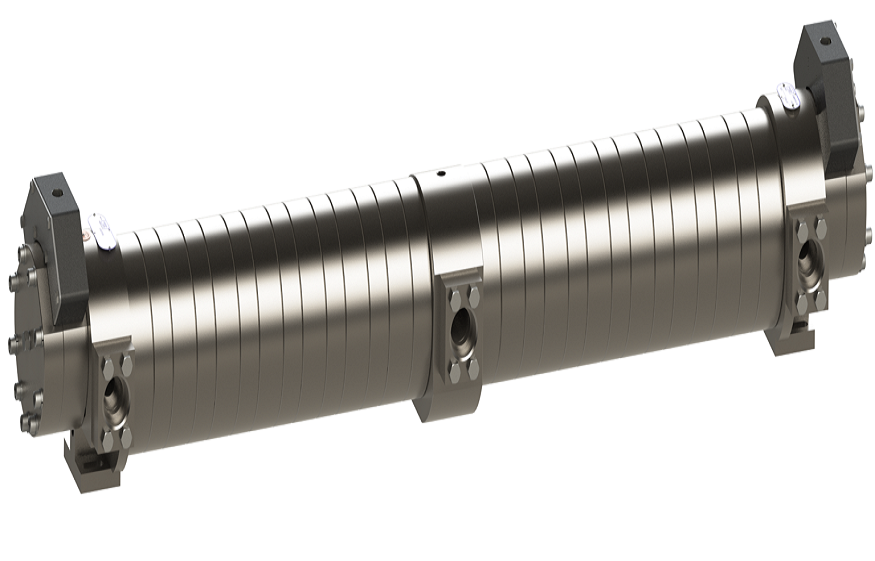
In the sophisticated world of industrial confectionery manufacturing, the seamless movement of ingredients—particularly tempered chocolate—is a primary determinant of production quality and facility throughput. Whether a facility is focused on high-speed enrobing, complex shell molding, or continuous cooling line operations, the precision of the liquid product transport determines the consistency of the final product. As production scales, the reliance on specialized equipment, such as chocolate transfer pumps and flow dividers, becomes essential for maintaining the delicate rheological properties of cocoa-based masses.
Precision Control in Liquid Product Transport
The integrity of chocolate during its transit from holding tanks to application heads is fragile. If subjected to excessive shear forces or inconsistent thermal management, the cocoa butter crystals can destabilize, leading to bloom or textural defects in the finished goods. This is where the choice of pumping technology matters.
Modern chocolate transfer pumps are engineered to operate at lower rotational speeds while maintaining steady volumetric output. By minimizing internal friction and avoiding turbulent flow, these pumps ensure that the product retains its tempered state until it reaches the depositor or coating curtain. Unlike generic industrial pumps, these systems often incorporate jacketed housings that allow for precise thermal control, preventing the chocolate from cooling and hardening within the lines, which would otherwise lead to pressure spikes or motor burnout.
Read More: Electrical Outlets: How Many Do You Really Need in Each
Matching Pump Technology to Viscosity
Because chocolate viscosity can fluctuate based on fat content, lecithin additives, and temperature, selecting the right pump design is a critical engineering decision. Positive displacement pumps are generally preferred over centrifugal models because they provide a non-pulsating flow and handle varying viscosities without shearing the fat particles. A well-specified pump ensures that the flow rate remains constant regardless of resistance in the downstream piping, which is vital for maintaining the weight accuracy of individual chocolate pieces.
Achieving Uniformity Through Advanced Flow Distribution
Once the tempered chocolate is in motion, the challenge shifts from moving the product to distributing it accurately. This is the domain of the flow divider. In high-output confectionery lines, a single supply line often needs to feed multiple depositors or nozzles simultaneously. Without a mechanism to manage this split, the lines closer to the pump receive higher pressure, while those further away experience a drop, resulting in inconsistent deposit volumes across the width of a conveyor belt.
The implementation of flow dividers solves this by physically splitting the stream into precisely measured, equal parts. These devices operate by partitioning the inlet flow through calibrated channels or rotating distribution elements, ensuring that every nozzle or enrobing head receives an identical volume of product. This level of synchronization is the backbone of high-speed production, where even a slight variation in output can lead to significant material waste or weight non-compliance.
Integrating Dividers into Automated Lines
When integrated into a PLC-controlled production environment, flow distribution hardware allows operators to adjust the width and volume of chocolate application in real-time. By utilizing a system of flow dividers, manufacturers can reduce manual recalibration times and ensure that changeovers between different product sizes or shapes are efficient and repeatable. This automation significantly reduces the potential for human error, which is often the leading cause of “giveaway” (the amount of excess chocolate applied to a product to ensure minimum weight standards).
Engineering Challenges in Chocolate Processing
Working with cocoa-based products presents unique mechanical and material hurdles. Chocolate is abrasive, temperature-sensitive, and prone to solidifying rapidly if the flow stops. Equipment designers must account for these factors when specifying components for a production line.
Preventing Material Accumulation
A common failure point in confectionery lines is the accumulation of hardened chocolate within pump seals or distribution manifolds. To combat this, systems are designed with “dead-zone” reduction in mind, ensuring that the product is always in motion and never allowed to linger in stagnant areas where it could crystallize. Furthermore, the seals used in chocolate transfer pumps must be capable of handling the inherent abrasiveness of cocoa solids, which can rapidly wear down standard mechanical seals. Using hardened, food-grade materials ensures that the equipment can endure long production cycles with minimal downtime for maintenance.
The Impact on Facility Throughput and Quality
The synergy between reliable pumping and accurate distribution has a direct impact on the bottom line. Efficiency in a confectionery plant is measured in “up-time” and “yield.” Every minute a production line is halted due to a pump failure or a clog in the distribution system is a direct loss of productivity.
By investing in high-quality chocolate transfer pumps that are tailored to the specific flow characteristics of the product, plant managers can significantly extend the interval between maintenance cycles. Similarly, the use of precision flow dividers ensures that the scrap rate remains minimal. When every gram of chocolate is accounted for and distributed with accuracy, the raw material costs—which are often a significant portion of the total operating budget—are better controlled.
Establishing Preventive Maintenance Protocols
Even the most robust hardware requires a structured maintenance approach. For facilities utilizing these critical systems, preventive measures should include:
- Regular Thermal Monitoring: Ensuring that heating jackets for pumps are consistently calibrated to maintain the ideal working temperature of the chocolate mass.
- Internal Inspection of Dividers: Periodic disassembly of distribution manifolds to inspect for micro-cracks or debris that could impede flow.
- Seal Integrity Checks: Replacing wearable components on a schedule determined by total throughput, rather than waiting for a failure to occur, which prevents the catastrophic loss of product mid-shift.
Future Trends in Confectionery Fluid Handling
As the demand for more complex, multi-layered chocolate products grows, the infrastructure behind the production line must evolve. We are seeing a move toward more integrated “smart” systems where sensors embedded in chocolate transfer pumps provide feedback to the central processing unit, automatically adjusting speed and pressure based on real-time viscosity data.
Similarly, the next generation of flow dividers is moving toward modular designs that allow manufacturers to switch out distribution plates or channels to accommodate different product formats in minutes rather than hours. These advancements allow manufacturers to be more agile in a market that is increasingly driven by seasonal variety and consumer demand for innovation.
Read More: The Importance of High-Pressure Sewer Line
Concluding Thoughts for Facility Managers
Selecting the correct equipment is not merely a purchase; it is a foundational choice that influences the scalability and quality of the entire confectionery output. Whether upgrading an existing line or designing a new facility from the ground up, focusing on the quality of liquid handling components ensures that the production process is as refined as the chocolate being produced. By prioritizing high-performance chocolate transfer pumps and high-precision flow dividers, manufacturers establish a reliable, efficient, and consistent foundation that can support long-term growth and technical excellence in the competitive world of chocolate manufacturing. The goal is to move the product from tank to belt with such precision that the mechanics become invisible, leaving nothing for the consumer to enjoy but the quality of the confection itself.